Hydrogen 101

An introduction to hydrogen and its role in Alberta’s energy future.

How Hydrogen is Produced
Why Hydrogen Matters
Where Hydrogen is Used
How Hydrogen Powers Transportation

What is Hydrogen?

Where Hydrogen Comes From

Hydrogen is abundant in nature but rarely found in a form that can be easily used. While it does occur naturally underground, it is difficult to access at scale, so it is typically produced from compounds like water or natural gas, making it an energy carrier rather than a primary energy source.

How Hydrogen is Used

Once produced, hydrogen can store and transport energy across systems. It can be converted into electricity through fuel cells or used as a fuel in combustion systems, depending on the application. The various methods of using hydrogen creates flexibility as Alberta works to diversify its energy mix.

Unlocking Global Scale

As an energy carrier, hydrogen holds immense potential to reduce emissions and reshape industrial energy systems, though its ultimate environmental value depends on how cleanly it is produced. Realizing this potential is driving the next phase of global energy strategy, with Alberta leveraging its existing infrastructure to lead that transition.

Where Hydrogen Comes From

Hydrogen is abundant in nature but rarely found in a form that can be easily used. While it does occur naturally underground, it is difficult to access at scale, so it is typically produced from compounds like water or natural gas, making it an energy carrier rather than a primary energy source.

How Hydrogen is Used

Once produced, hydrogen can store and transport energy across systems. It can be converted into electricity through fuel cells or used as a fuel in combustion systems, depending on the application. The various methods of using hydrogen creates flexibility as Alberta works to diversify its energy mix.

Unlocking Global Scale

As an energy carrier, hydrogen holds immense potential to reduce emissions and reshape industrial energy systems, though its ultimate environmental value depends on how cleanly it is produced. Realizing this potential is driving the next phase of global energy strategy, with Alberta leveraging its existing infrastructure to lead that transition.
Why Hydrogen Matters

As countries work toward net-zero emissions, reducing emissions in high-impact sectors has become a priority. Hydrogen plays a key role by offering a low-emissions solution where other options are limited.

Decarbonizing Heavy Industry

Certain industries face unique challenges because they are difficult to decarbonize using electricity alone. These industries require long operating ranges or consistent high heat that current solutions cannot easily provide. Some examples include:

  • Chemical Production
  • Refining
  • Heavy-duty trucking

Hydrogen provides a pathway that can meet these demands. In regions like Alberta, where the electricity grid is still carbon-intensive, options like blue hydrogen offer a more immediate path forward.

Pathways to Integration

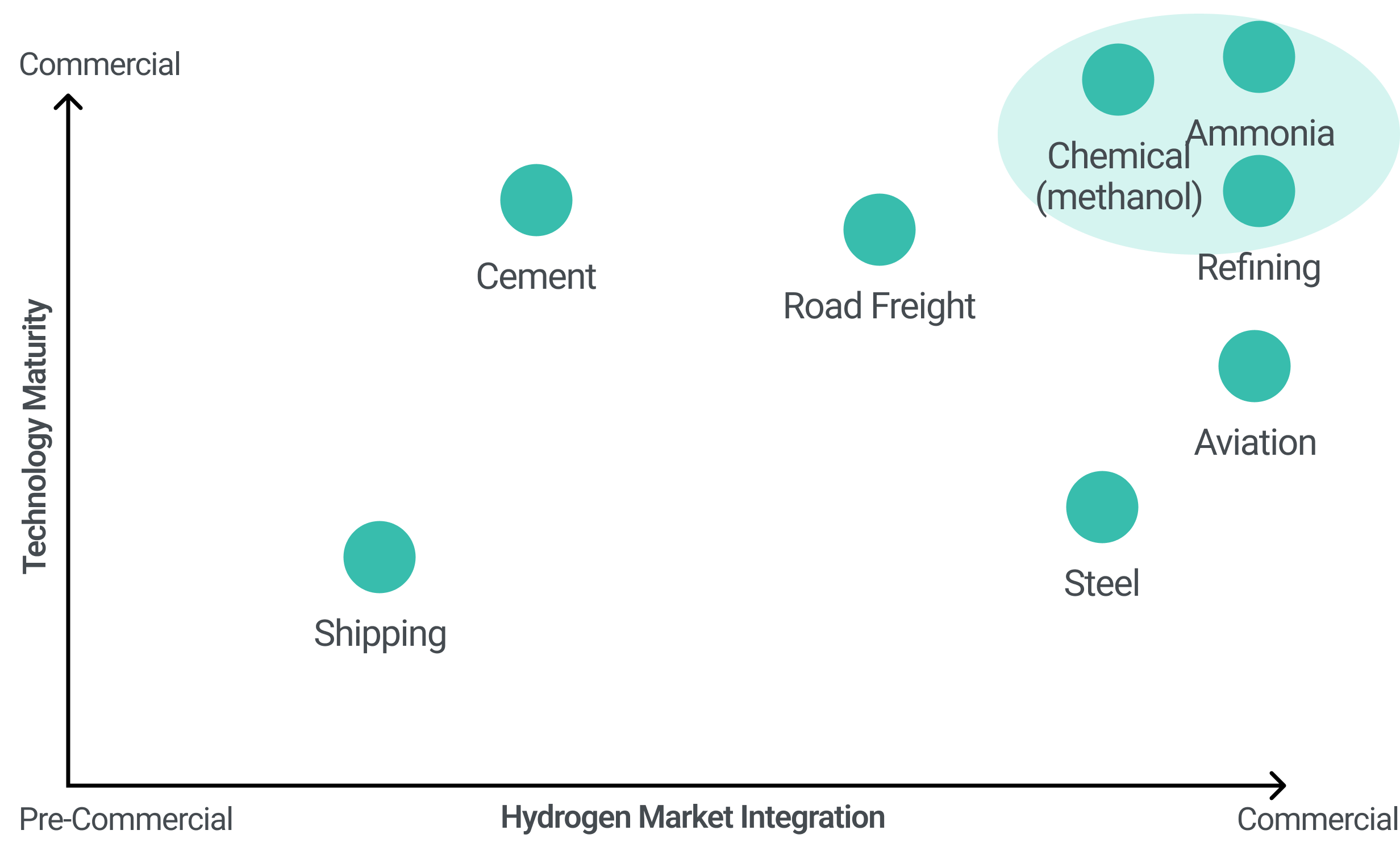
The timeline for hydrogen adoption depends on both its technological maturity and its integration across different market sectors. Mapping this landscape reveals the direct deployment areas driving the market forward today, alongside the long term opportunities for future industrial scale.

Hydrogen integration is closer than it appears. Because hydrogen is already an essential component in ammonia, refining, and chemical processing, these sectors can adopt low-carbon hydrogen with limited changes to their existing assets.

How Hydrogen is Produced

Hydrogen can be produced in several different ways, with each method using various feedstocks and production processes that result in diverse characteristics and emissions profiles. These methods are often referred to using a color system, which serves as a simplified way to distinguish between them.

Production Methods

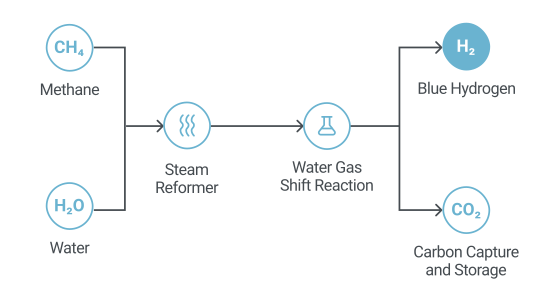
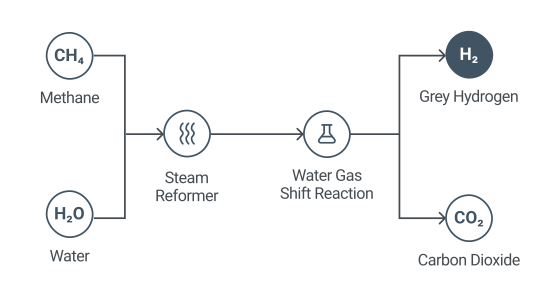
Natural Gas Production

GREY HYDROGEN | High Carbon

Produced from natural gas by splitting it into hydrogen and carbon dioxide. It’s the most common method used today, but releases CO2 into the atmosphere.

Natural Gas & Carbon Capture

BLUE HYDROGEN | Low Carbon

Produced the same way as grey hydrogen, but uses carbon capture techniques to reduce emissions. This makes it a net-zero option in Alberta.

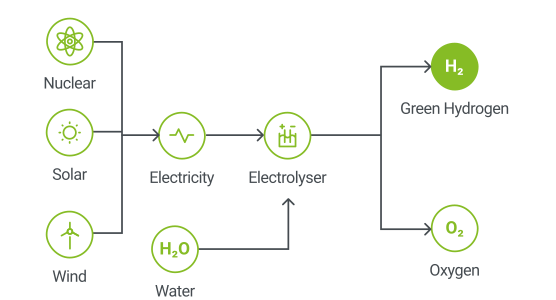
Renewable Electrolysis

GREEN HYDROGEN | Low Carbon

Produced using renewable electricity to split water into hydrogen and oxygen. It has zero direct emissions, however it’s dependent on the local availability of renewable energy.

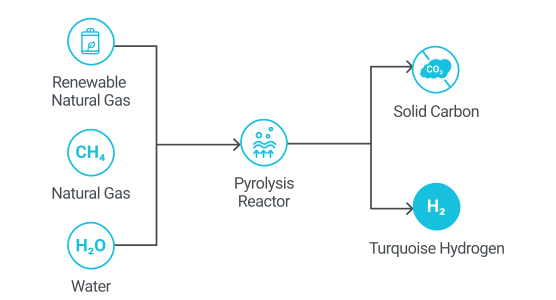
Emerging Production Methods

TURQUOISE HYDROGEN | Low Carbon

New hydrogen production methods are still developing. Like turquoise hydrogen that uses natural gas with no emissions, producing solid carbon instead of CO2 gas.

Production in Alberta

Our province produces roughly
2.5M
TONNES
of hydrogen each year.
Explore Hydrogen Projects in Alberta
Alberta is the largest hydrogen producer in Canada, holding a major share of global production capacity.
Read more
Linde is developing one of Canada’s biggest clean hydrogen facilities in Fort Saskatchewan.
Read more
Alberta Carbon Trunk Line supports carbon capture and storage as the industry grows.
Read more
Air Products is building a Net Zero Hydrogen Energy Complex in Edmonton to produce blue hydrogen.
Read more
Alberta is the largest hydrogen producer in Canada, holding a major share of global production capacity.
Read more
Alberta Carbon Trunk Line supports carbon capture and storage as the industry grows.
Read more
Linde is developing one of Canada’s biggest clean hydrogen facilities in Fort Saskatchewan.
Read more
Air Products is building a Net Zero Hydrogen Energy Complex in Edmonton to produce blue hydrogen.
Read more
1 / 4
Production
Storage
Transportation
End Use

Hydrogen can be made in different ways, using resources such as natural gas, electricity, and water. The right production method depends on the project, location, cost, and emissions goals.

Hydrogen can be stored in tanks, surface facilities, or underground formations to help keep supply available when and where it is needed.

Hydrogen can be moved by pipelines, tube trailers, and liquid tankers, with emerging methods like Liquid Organic Hydrogen Carriers (LOHC).

Hydrogen can help lower emissions in heavy industry, long-haul transportation, and heating by replacing or reducing the use of high-emitting fuels.

The Hydrogen Value Chain

Using hydrogen at scale depends on a connected system that moves it from production to storage, transportation, and end use across multiple sectors. Collaboration between industry leaders and early movers is helping bring this system to life.
Production
Storage
Transportation
End Use
Hydrogen can be made in different ways, using resources such as natural gas, electricity, and water. The right production method depends on the project, location, cost, and emissions goals.
Hydrogen can be stored in tanks, surface facilities, or underground formations to help keep supply available when and where it is needed.
Hydrogen can be moved by pipelines, tube trailers, and liquid tankers, with emerging methods like Liquid Organic Hydrogen Carriers (LOHC).
Hydrogen can help lower emissions in heavy industry, long-haul transportation, and heating by replacing or reducing the use of high-emitting fuels.
1 / 4

Key Considerations for Scaling Hydrogen

A functional hydrogen economy requires a synchronized value chain. Each link in the chain introduces its own requirements, and choices made in one area ripple across all others.

End-Use Alignment

Hydrogen quality requirements vary by application, making alignment between producers, distributors, and end users essential.

Storage & Transportation

Storage and transportation also shape how hydrogen is delivered at scale, requiring specialized infrastructure.

Inputs & Regulation

Production depends on access to water, feedstock, and low-carbon energy, while strong safety standards and regulatory alignment are essential as projects scale and connect to broader markets.

Regional Leadership

The Edmonton region is already addressing these challenges, positioning itself as a leader in hydrogen development.

Alberta’s Hydrogen Ecosystem

Infrastructure Advantage

Existing infrastructure like CO2 pipelines, energy corridors, and upgrading facilities reduces execution risk for large scale hydrogen projects. The Edmonton region is also among the top globally for operational CO2 storage capacity.

Ecosystem Coordination

To support coordination across this complex value chain, the Edmonton Region Hydrogen Hub (ERH2) connects industry, government, and research partners to advance hydrogen development throughout the province.

Workforce Development

Institutions like NAIT are building workforce capacity through specialized training and micro-credentials for hydrogen safety, handling, and transportation as the industry grows.

Get Ecosystem Updates

Where Hydrogen is Used

Trucking

What it does

Powers heavy-duty vehicles using fuel cell, HICE, or dual-fuel systems.

Why it matters

Supports long range transport without the weight and charging limits of batteries.

Local initiative

Projects led by the Alberta Motor Transport Association are testing hydrogen trucks along the Edmonton-Calgary corridor.

Industrial Chemicals

What it does

Used in the refining of petroleum products and the production of clean fuels. These products are used in farming, manufacturing, transportation, and everyday materials.

Why it matters

Many chemical processes are difficult to fully electrify. Low-carbon hydrogen can help reduce emissions while supporting existing industrial systems.

Local initiative

Dow’s Path2Zero Project in Fort Saskatchewan is using low-carbon hydrogen and carbon capture infrastructure to support lower-emissions chemical production in Alberta.

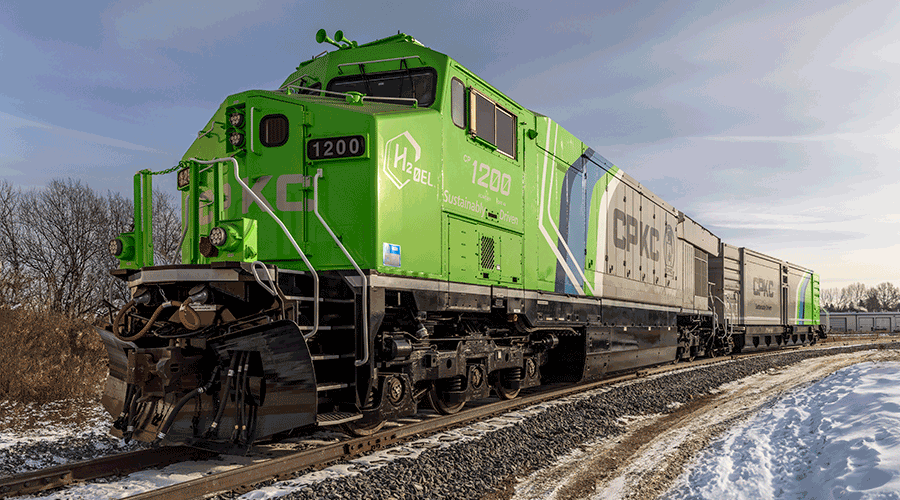
Rail

What it does

Replaces diesel locomotives with hydrogen-powered alternatives.

Why it matters

Facilitates the transition to zero-emission where traditional electrification is difficult.

Local initiative

Aviation & Airports

What it does

Supports the production of Sustainable Aviation Fuel (SAF) and future hydrogen-powered aircraft.

Why it matters

Aviation requires high energy density, making it one of the hardest sectors to decarbonize. Hydrogen offers a unique solution to reduce emissions.

Local initiative

Edmonton International Airport is advancing hydrogen-powered operations and aircraft initiatives.

Steel-Making

What it does

Replaces coal in the steelmaking process using hydrogen as a reducing agent.

Why it matters

Significantly lowers emissions in one of the most carbon-intensive steps of the steelmaking process.

Local initiative

Regional studies are exploring hydrogen-based steel production for export markets. Prism Diversified is exploring the development of the Clear Hills deposit in Peace River, AB.

Heating

What it does

Can be blended with natural gas and used in existing heating systems for homes, businesses, and buildings.

Why it matters

Some buildings are expensive or difficult to switch fully to electric heating. Hydrogen blending can help lower emissions while using existing natural gas infrastructure.

Local initiative

The Fort Saskatchewan Hydrogen Blending Project is blending hydrogen into existing natural gas infrastructure in Alberta.

1 / 4

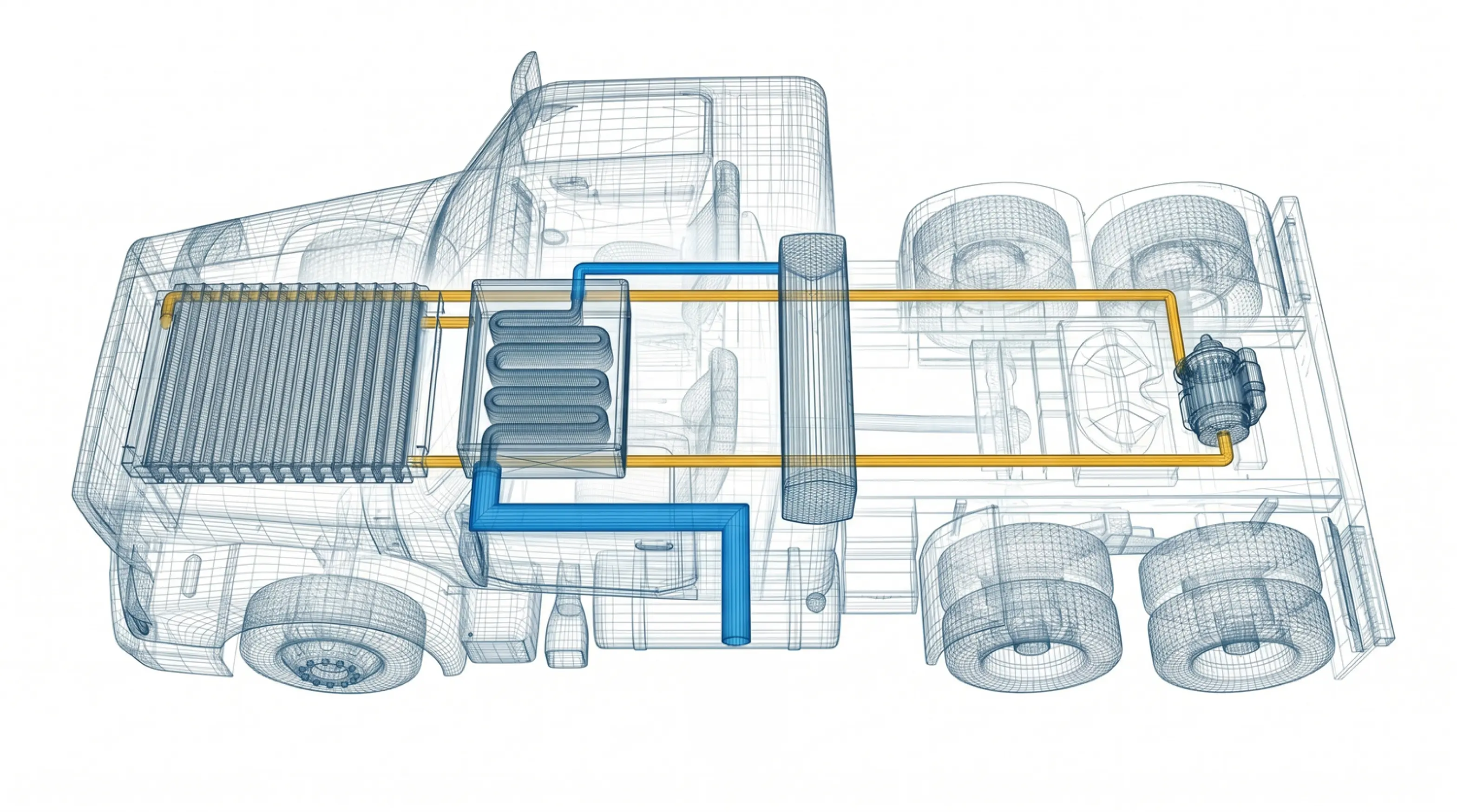
A Closer Look at Hydrogen in Transportation

Fuel Cells Electric Vehicles (FCEVs)

1. Hydrogen Fuel Tank
2. Hydrogen Fuel Line
3. Fuel Cells to Battery Electricity Flow
4. Electric Drive Motor Power Supply
5. Battery Pack
6. Hydrogen  Fuel Cell
7. Regenerative Braking Return Electricity Flow
8. Electric Drive Motor
9. Water Exhaust
1. Hydrogen Fuel Tank
2. Hydrogen Fuel Line
3. Fuel Cells to Battery Electricity Flow
4. Electric Drive Motor Power Supply
5. Battery Pack
6. Hydrogen  Fuel Cell
7. Regenerative Braking Return Electricity Flow
8. Electric Drive Motor
9. Water Exhaust

Definition

Fuel Cells Electric Vehicles (FCEVs) convert hydrogen into electricity using a fuel cell to power an electric motor.

advantage

Offers long driving range and fast refueling, with water vapors as the only tailpipe emission.

limitation

Requires high-purity hydrogen and access to fueling infrastructure, both of which are still developing.

best fit

Long-haul and heavy-duty transportation where range, payload, and uptime are critical.

1 / 4

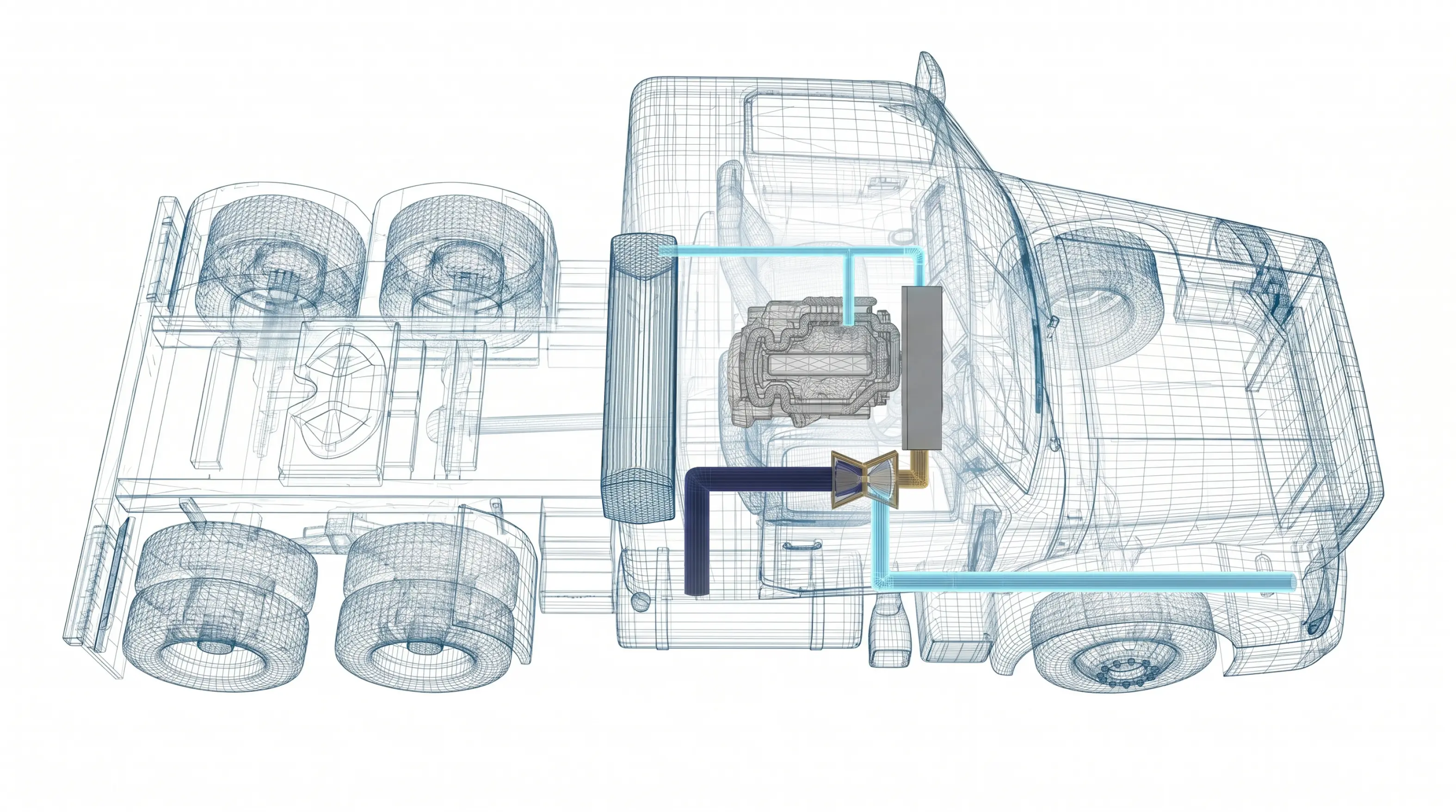
Hydrogen Internal Combustion Engine (HICE) Vehicles

Definition

HICE vehicles burn hydrogen in an engine similar to a traditional diesel or gasoline system.

advantage

Can use existing engine technology and supply chains, with greater tolerance for lower-purity hydrogen.

limitation

Produces nitrogen oxide (NOx) emissions and is generally less efficient than fuel cell systems.

best fit

Heavy-duty and off-road applications with high energy demand, such as mining and industrial operations.

1 / 4
1. Hydrogen Fuel Tank
2. Hydrogen Fuel Line
3. Cooled & Compressed Air
4. Intercooler
5. Compressed Air
6. Compressor
7. Turbochanger
8. Engine
9. Exhaust (Mainly Nitrogen Gas, Water, and Oxygen Gas)
1. Hydrogen Fuel Tank
2. Hydrogen Fuel Line
3. Cooled & Compressed Air
4. Intercooler
5. Compressed Air
6. Compressor
7. Turbochanger
8. Engine
9. Exhaust (Mainly Nitrogen Gas, Water, and Oxygen Gas)

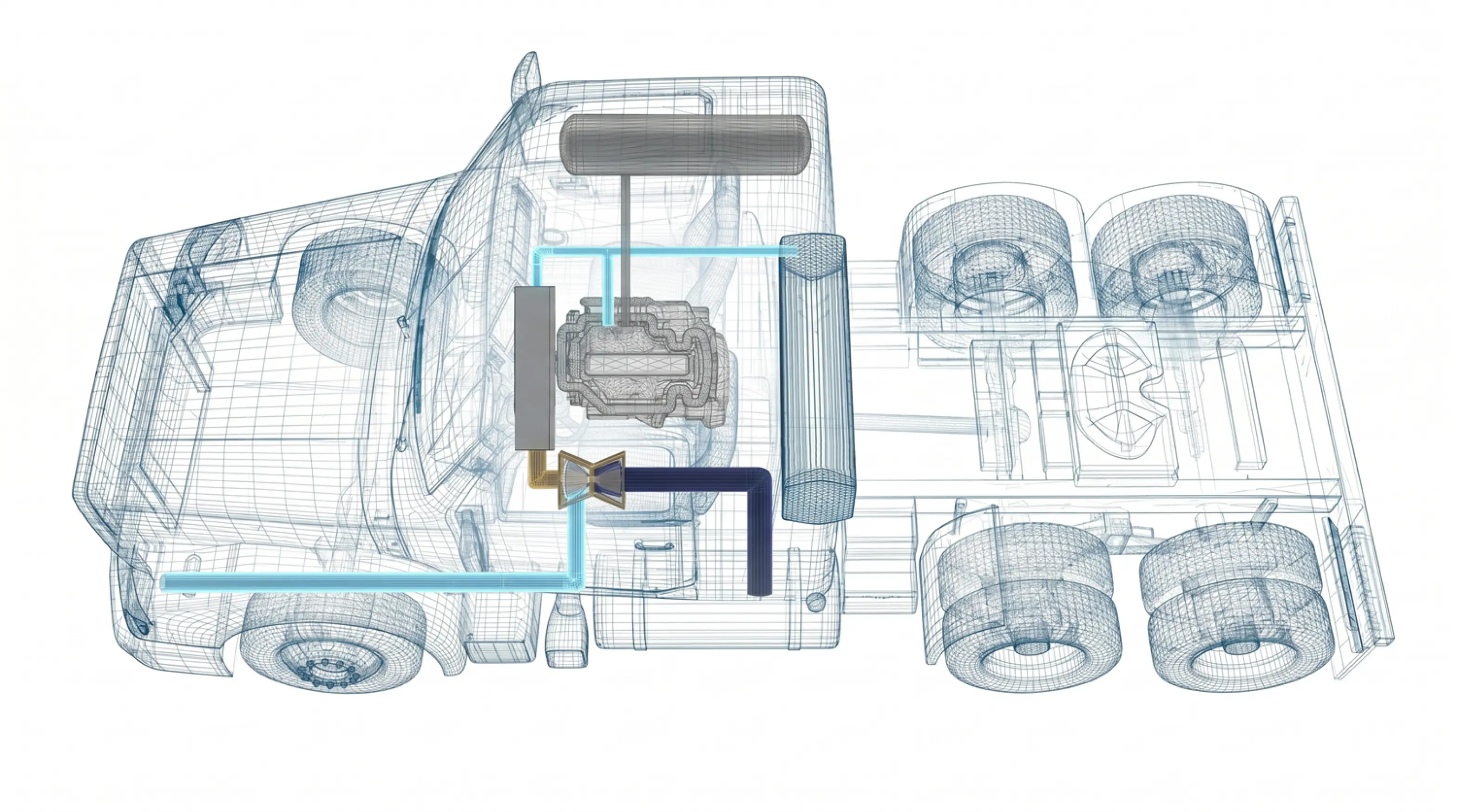
Dual Fuel Hydrogen Vehicles

1. Hydrogen Fuel Tank
2. Diesel Fuel Tank
3. Hydrogen Fuel Line
4. Diesel Fuel Line
5. Cooled & Compressed Air
6. Intercooler
7. Compressed Air
8. Compressor
9. Turbochanger
10. Engine
11. Exhaust (Mainly Nitrogen Gas, Water, and Oxygen Gas)
12. Air
1. Hydrogen Fuel Tank
2. Diesel Fuel Tank
3. Hydrogen Fuel Line
4. Diesel Fuel Line
5. Cooled & Compressed Air
6. Intercooler
7. Compressed Air
8. Compressor
9. Turbochanger
10. Engine
11. Exhaust (Mainly Nitrogen Gas, Water, and Oxygen Gas)
12. Air

Definition

Dual-fuel vehicles use a combination of hydrogen and diesel, allowing existing engines to operate with a hydrogen blend.

advantage

Can be retrofitted onto existing vehicles, reducing emissions without replacing assets or disrupting operations.

limitation

Not zero-emission and still produces pollutants, including carbon emissions and NOx.

best fit

Existing diesel fleets looking for a near-term emissions reduction while transitioning to newer technologies.

1 / 4

Technology Comparison

FCEV

HICE

Dual Fuel

Maturity

Most mature, in active deployment and pilots

Early-stage, currently in prototyping

Available today as retrofit solution

Cost

High upfront cost

High development and capital costs in early stages

Lower cost due to retrofitting existing vehicles

Infrastructure

Requires high-purity hydrogen and dedicated fueling network

Requires fueling infrastructure but more flexible on fuel quality

Can operate using existing diesel infrastructure with hydrogen support

Emissions

Zero tailpipe emissions (water vapor only)

Produces NOx emissions, not fully zero emission

Reduces emissions but still produces pollutants

FCEV

Maturity

Dual-fuel vehicles use a combination of hydrogen and diesel, allowing existing engines to operate with a hydrogen blend.

Cost

High upfront cost

Infrastructure

Requires high-purity hydrogen and dedicated fueling network

Emissions

Zero tailpipe emissions 
(water vapor only)

HICE

Maturity

Early-stage, currently in prototyping

Cost

High development and capital costs 
in early stages

Infrastructure

Requires fueling infrastructure but 
more flexible on fuel quality

Emissions

Produces NOx emissions, not fully zero emission

Dual Fuel

Maturity

Available today as retrofit solution

Cost

Lower cost due to retrofitting 
existing vehicles

Infrastructure

Can operate using existing diesel infrastructure with hydrogen support

Emissions

Reduces emissions but still 
produces pollutants

Hydrogen Transportation in Practice

Where We Are

Hydrogen fueling infrastructure in Alberta is still limited, with only a small number of stations and pilot sites in operation.

Hear from the First Movers

What’s Supporting Adoption

New fueling sites, corridor initiatives, fleet pilots, and service training facilities are helping build the practical network needed for broader hydrogen transportation adoption.

Where We Are

Hydrogen technologies have different fuel requirements and levels of operational flexibility, which can impact how and where they are deployed.

Hear from the First Movers

What’s Supporting Adoption

In Alberta, dual-fuel systems are being adopted as a practical bridge, helping fleets reduce emissions while maintaining operational continuity.

Where We Are

Hydrogen vehicles and fuel costs remain higher than conventional options, impacting adoption.

Hear from the First Movers

What’s Supporting Adoption

The Edmonton Region Hydrogen Hub has developed a total cost of ownership (TCO) calculator to help fleet operators evaluate costs and factor in incentives from federal and provincial programs.

Estimate total cost of ownership

Fueling Infrastructure

Where We Are

Hydrogen fueling infrastructure in Alberta is still limited, with only a small number of stations and pilot sites in operation.

What’s Supporting Adoption

New fueling sites, corridor initiatives, fleet pilots, and service training facilities are helping build the practical network needed for broader hydrogen transportation adoption.

Hear from the First Movers

Technology Choice

Where We Are

Hydrogen technologies have different fuel requirements and levels of operational flexibility, which can impact how and where they are deployed.

What’s Supporting Adoption

In Alberta, dual-fuel systems are being adopted as a practical bridge, helping fleets reduce emissions while maintaining operational continuity.

Hear from the First Movers

Cost & Incentives

Where We Are

Hydrogen vehicles and fuel costs remain higher than conventional options, impacting adoption.

What’s Supporting Adoption

The Edmonton Region Hydrogen Hub has developed a total cost of ownership (TCO) calculator to help fleet operators evaluate costs and factor in incentives from federal and provincial programs.

Hear from the First Movers